








by Cara Ramer, Student Public Relations Writer
As competition intensifies at the nation’s top graduate schools, students from smaller universities often wonder whether they will be able to keep pace. For Cedarville University engineering graduates like Jordan Edwards, that question has been answered with a resounding “yes.”
Cedarville Engineering Graduates Succeed in Graduate School at Baylor and Other Top Programs
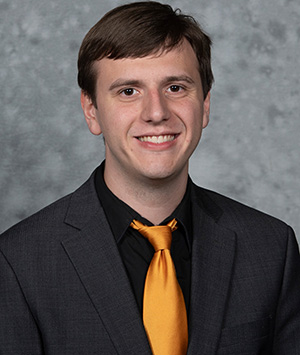 When Jordan Edwards enrolled at Baylor University for graduate studies in electrical and computer engineering, he expected the adjustments most students brace for — intensive classes, faster pacing and higher expectations — and wondered whether his undergraduate education fully prepared him for his graduate studies.
What he didn’t expect was the reaction from the students around him. As coursework intensified, his classmates were surprised by how familiar he was with the content.
“Other students at Baylor have been shocked at how much I learned during my undergraduate years at Cedarville,” Edwards said. “I felt very prepared for all my graduate academic work.”
Electrical and Computer Engineering Curriculum Designed to Prepare Students for Competitive Research Programs
Edwards’ experience echoes that of other Cedarville University alumni pursuing graduate-level education, particularly at some of the nation's most research-intensive universities.
 “Academically, Cedarville’s engineering program is rigorous,” said Rebekah Edwards, a Cedarville electrical engineering alumna who is pursuing graduate studies at Baylor alongside her husband, Jordan. “If you can complete senior year at Cedarville, you can do graduate-level classes anywhere.”
That preparation is intentional, according to Cedarville faculty.
“Cedarville’s curriculum is designed with graduate school in mind, preparing our students for competitive, research-driven programs,” explained Dr. Tim Tuinstra, head of electrical and computer engineering at the university.
Cedarville Engineering Alumni Building a Pipeline to R1 Universities Like Purdue, Ohio State and Virginia Tech
Jordan and Rebekah aren’t isolated cases; they are part of a growing pattern among Cedarville engineering alumni. Their academic preparation has allowed graduates to succeed at Baylor, Purdue University and Ohio State University — institutions known for their high expectations and demanding engineering research environments. Cedarville faculty have observed emerging pathways between Cedarville and schools such as Baylor and Virginia Tech, with three Cedarville electrical engineering graduates currently pursuing graduate work at Baylor and three current electrical engineering students recently having completed internships at Virginia Tech.
R1 Research Universities and the Carnegie Classification Explain Why Cedarville Alumni Success is Notable
Baylor, Purdue, Ohio State and Virginia Tech are all classified as R1 institutions, the highest level of research activity under the Carnegie Classification system. With only 187 R1 universities nationwide, these programs represent a highly competitive academic landscape, making the success of Cedarville alumni particularly notable as they enter research-driven graduate programs.
That preparation often shows up early. Edwards said advanced coursework at Baylor mirrored concepts he had already encountered as an undergraduate, allowing him to focus less on catching up and more on applying what he had learned.
Baylor Professor Praises Cedarville Engineering Students for Lab Readiness, Adaptability and Christian Commitment
Over time, those individual experiences begin to add up. Dr. Charles Baylis, professor of electrical and computer engineering at Baylor and director of SMART Hub, a Department of War (formerly Department of Defense) Spectrum Innovation Center, has spent years recruiting Cedarville students for Baylor’s graduate programs.
“Cedarville students are exceptionally well trained, adaptable, and independent,” said Baylis. “What sets Cedarville students apart is the combination of rigorous technical training, real versatility in the lab and a deep commitment to Christ.”
Baylis hopes to see a pipeline of Cedarville students to Baylor continue to develop. “My hope is that the partnership between Cedarville and Baylor keeps expanding,” he said. “More students coming through, more collaboration on workforce development and even some of our PhD graduates going back to teach at Cedarville.”
For Jordan, the transition to graduate school never became the challenge he expected; instead, it was a natural progression built on a strong undergraduate foundation.
As Cedarville engineering alumni continue to succeed at R1 universities across the country, their experiences reflect a curriculum intentionally designed to prepare students for the demands of the nation’s most intense research environments.
About Cedarville University
Cedarville University, an evangelical Christian institution in southwest Ohio, offers undergraduate and graduate residential and online programs across arts, sciences and professional fields. With 7,265 students, it is among Ohio's largest private universities and is ranked among the nation’s top five evangelical universities in the Wall Street Journal’s 2026 Best Colleges in the U.S. Cedarville is also known for its vibrant Christian community, challenging academics and high graduation and retention rates. Learn more at cedarville.edu.