








About the Pediatric Nurse Practitioner Degree
Why Pursue an Online PNP MSN at Cedarville?
Are you ready to take the next step in your career as an advanced practice nurse who leads with excellence and serves with Christian compassion?
Cedarville’s Christian MSN Pediatric Nurse Practitioner program will equip you to provide primary care for children from birth to age 21. In this affordable, accredited, and online program, you'll master the assessment, diagnosis, management, and treatment of common acute and chronic health issues, as well as health promotion and patient and family education. You'll also be trained to apply evidence-based practices to meet primary care and prevention needs.
More importantly, you'll learn to integrate your faith into your career, using your platform as a ministry for Christ. The biblical principles woven throughout your coursework will deeply influence how you approach patient care, preparing you to shine a light for Christ as an advanced practice nurse with a servant's heart.
Request Info Schedule a Call with an AdvisorScholarships Available!
A limited number of $3,000–$5,000 scholarships are now available to graduate nursing students with financial need. Apply today!
Top 5 in Ohio
U.S. News & World Report listed Cedarville University’s online MSN program in the top 100 programs nationally and top 5 in Ohio.
The master's degree program in nursing at Cedarville University is accredited by the Commission on Collegiate Nursing Education (http://www.ccneaccreditation.org).
What Sets Cedarville Apart?
-
Biblical Worldview
All courses are built on the solid foundation of Scripture. -
Advanced Practice
Cedarville's MSN will equip you with the training and skills you need to serve as an advanced practice nurse. -
Online
All MSN courses are offered in an online format, with flexible part-time and full-time completion options.
Program Overview
What Can You Do With a PNP Degree?
The Pediatric Nurse Practitioner area of focus prepares you as an advanced practice nurse to provide primary care for children from birth to age 21. As a graduate of the MSN Pediatric Nurse Practitioner program, you will be qualified to seek national certification through the Pediatric Nursing Certification Board (PNCB) and then to seek employment as a pediatric nurse practitioner.
Primary Care Pediatric Nurse Practitioners work in a variety of primary care settings in collaboration with a healthcare team.
Each U.S. state and territory may have different professional licensure requirements governing nursing occupations. Cedarville ensures that its programs meet the educational prerequisites for professional licensure within the State of Ohio. If you reside outside Ohio, you should contact Cedarville's Director of Graduate Nursing Programs as well as your state licensure board to confirm licensure requirements for your state or territory before beginning the MSN.

Stewarding Your Gifts With a Graduate Degree from Cedarville University
President Thomas White outlines Cedarville University’s vision for graduate education, focusing on stewardship, academic excellence, and Gospel purpose. He explains how developing God-given gifts through advanced study brings glory to God, serves others, and prepares graduates to influence culture with truth, compassion, and conviction through faith-integrated learning.
Admission, Costs and Aid, Start Dates
Admission Requirements — The first step in your graduate school journey at Cedarville is to apply for admission.
MSN Admission RequirementsCosts and Financial Aid — Your decision to pursue quality, Christian graduate education represents a valuable investment in your career and professional development. To assure your degree is also affordable, Cedarville graduate programs are competitively priced and can be supplemented with a variety of financial aid.
MSN Cost InformationProgram Start Dates — You can enroll and begin classes in August, October, January, March, May, or June.
Affiliate Institution Benefits — If you attend one of the following institutions, you may qualify for preferred admission benefits and/or tuition discounts for select Cedarville healthcare degree programs.
Click your institution's logo to learn more.















Program Format and Related Programs
Cedarville offers graduate and undergraduate programs with flexible completion options. You may also want to consider these related programs as you choose the degree or program that is the best fit for you.
Related Programs
- DNP, Pediatric Nurse Practitioner - Online
- DNP, Doctor of Nursing Practice - Online
- MSN, Adult-Gerontology Acute Care Nurse Practitioner - Online
- MSN, Family Nurse Practitioner - Online
- MSN, Nurse Educator - Online
- MSN, Nursing Leadership in Healthcare Improvement - Online
- Nursing Education (Graduate Certificate) - Online
- Nursing Leadership (Graduate Certificate) - Online
- Global Public Health (Graduate Certificate) - Online
- Nursing
Program Level and Format
- Graduate
- Online
From Our Dean:
-
Cedarville University's nursing programs and curricula prepare graduate students to implement the best evidence-based guidelines and expert clinician experience to develop equitable outcomes for populations. We integrate academic rigor, a biblical worldview, and low faculty-to-student ratios to use nursing as a ministry for Jesus Christ.
Marcia Williams, PhD, APRN-FNP, Dean of the School of Nursing, Associate Professor of Nursing 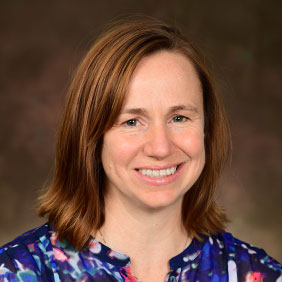

Program News
-
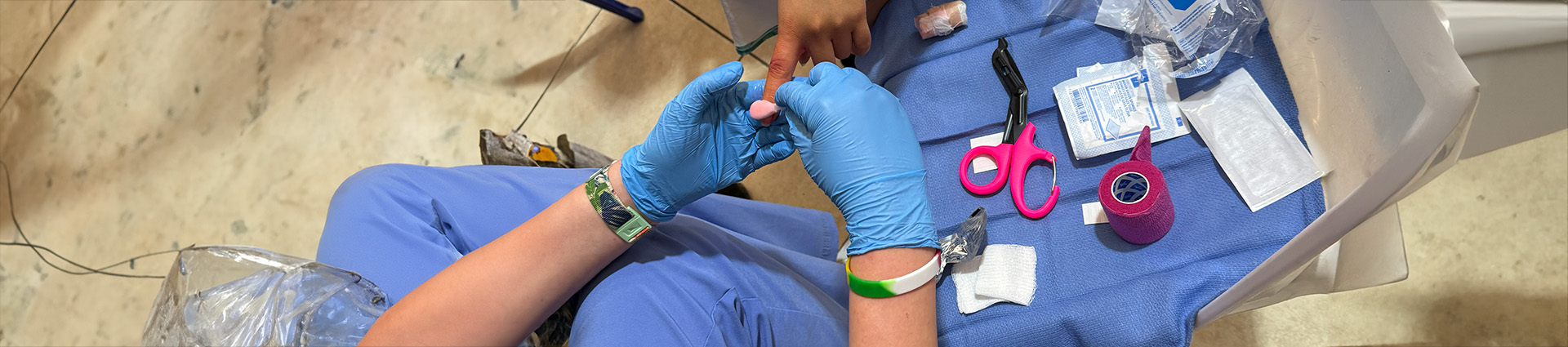
School of Nursing Joins International Honor Society
Cedarville University nursing students can now join Sigma Theta Tau through the Zeta Phi at-large chapter, gaining access to professional networking, continuing education and career opportunities while recognizing the achievement of 37 newly inducted students. -

Advancing Care: Grad Nursing Program Equips Nurses for Leadership
Cedarville University’s graduate nursing program is celebrating 15 years of growth, national recognition and a 98% placement rate after preparing nearly 400 graduates for advanced practice roles across the country.

For more information related to our MSN and DNP degree programs, visit our Insights Blog where you can read interesting posts like Balancing Job, Family, and Grad School: 5 Principles for Christian Nurses.