








Explore Big Questions. Make Real Impact. Start Now.
If you're excited by the idea of discovering new therapies, improving patient outcomes, or combining faith with scientific innovation, Cedarville University's School of Pharmacy is the place to start. As a student in our professional pharmacy program, you'll build a strong research foundation — including research in pharmaceutical sciences and pharmacy practice — beginning in your first year.
At Cedarville, research is hands-on, Christ-centered, and built into your experience. It's more than an academic requirement — it's a key part of our mission to equip pharmacists who will make a lasting difference in their communities and across the world.
Student Research in the PharmD Program
Every Cedarville pharmacy student gains a foundation in research through our integrated curriculum. In your P1 year, you'll complete a dedicated research course where you learn the principles of research design and methodology. Throughout the rest of the curriculum, you'll develop the critical skills needed to evaluate journal articles and apply emerging evidence to real patient cases — preparing you to practice at the highest level from day one.
For students who want to go further, paid research assistantship opportunities are available to work alongside pharmacy practice or pharmaceutical sciences faculty on their active research projects. These experiences can lead to presentations at local, state, or national pharmacy conferences and publications in peer-reviewed journals.
Recent projects have focused on cancer treatment, drug development, biologics, medication therapy management, and educational strategy in pharmacy instruction.
Pharmaceutical Research Areas

Pharmaceutical Sciences
Cedarville’s pharmaceutical sciences research focuses on drug discovery, development, and safety. Faculty lead projects in medicinal chemistry, pharmacology, and toxicology — exploring everything from the benefits and risks of natural products to therapies for brain tumors and vascular dysfunction.
Students engaged in this work learn how drugs interact with the body and what makes a medication safe and effective. Collaborative partnerships with hospitals and industry help translate research from the lab into real-world application, illustrating the significance of research in pharmaceutical sciences for future pharmacists.
Pharmacy Practice
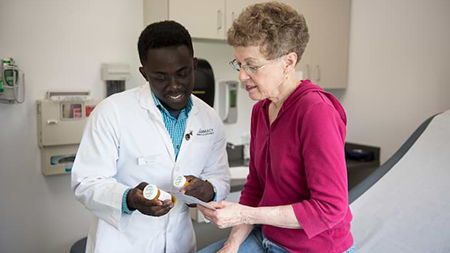
This area centers on research topics in pharmacy practice that improve real-world care — such as discharge counseling, medication dosing in neurology, and the impact of MTM services. Research is often interprofessional and patient-focused, preparing students for clinical leadership, residencies, or fellowships.
Through faculty mentorship and applied projects, students learn how research can directly shape better patient outcomes and more effective pharmacy services.

Social and Administrative Sciences
Here, research explores how cultural, behavioral, and economic factors shape healthcare delivery and medication use. Projects include studies on patient-provider communication, pharmacy technician roles, and behavior change strategies.
Educational research also plays a growing role, helping faculty refine how future pharmacists are taught and prepared for ethical, evidence-based practice.