








Considering a Bible or ministry degree means building your life on God’s Word. Through careful study of Scripture, you'll grow in faith, develop Christlike character, and prepare to serve the Church and share the Gospel for a lifetime.
Use the buttons below to learn how biblical and theological education shapes knowledge, passion, and skill and to explore vocational pathways into ministry and professional life.
Explore Ministry Vocations
Rooted in careful study of the Bible, students are prepared to serve the Church, proclaim the Gospel, and lead with biblical conviction. Whether you are called to ministry, missions, teaching, leadership, or other areas of service, biblical and theological education provides a foundation for faithful living and vocation. Graduates apply this preparation in ministry settings, further study, and professions across many fields.
Consider the various vocational ministry opportunities below and discover the degree pathways to get there.
Find Your Fit
Students pursue a Bible degree for different reasons. Some sense a call to pastoral ministry, missions, or church leadership. Others plan to work in business, education, counseling, healthcare, or other professions and want their lives and careers rooted in Scripture.
A Bible degree doesn’t limit you to vocational ministry — it strengthens your understanding of God's Word and prepares you to serve Christ faithfully, whether in the Church or in the workplace. Wherever God leads, studying Scripture shapes how you live, lead, and serve.

Consider Bible and Ministry Degree Pathways
These faculty-written articles take a closer look at Bible and ministry degree pathways, helping you understand what areas of study you could choose from, what careers they could lead to, and how to get started.
What Can You Do With a Bible Degree? Careers in Ministry and Beyond

Explore what you can do with a Bible degree, including careers in ministry, nonprofit work, education, counseling, and writing. Learn the key skills you’ll gain and how this degree prepares you for a range of career possibilities or graduate study.
Continue reading »
What Makes a Strong Bible Program? 7 Criteria to Look for When Choosing the Best Bible Degree Program

What makes a strong Bible degree program? Here are seven criteria to look for as you decide which program offers a strong biblical foundation and best fits your calling.
Continue reading »
On-Campus vs. Online Bible Degree: Which Is Right for You?

On-campus or online — which Bible degree is right for you? Compare Cedarville’s on-campus and online Bible degrees to understand key differences in flexibility, cost, community, and curriculum — and choose the path that best fits your calling.
Continue reading »
Bible Blog Contributors
Cedarville University's Bible blog articles are written by faculty and professionals with real-world and academic expertise.

Jeremy Kimble, PhD
Professor of Systematic and Applied Theology
Mark Leeds
Associate Professor of Theology
Jeremy Oliver, MDiv
Director of MTS Program, Assistant Professor of Applied Theology
Trent Rogers, PhD
Dean of SBTS, Associate Professor of NT and Greek
Ched Spellman, PhD
Professor of Biblical and Theological Studies, Lead Developer of Online Bible ProgramsDiscover Bible and Ministry Degree Programs
Bible and ministry degree programs through Cedarville University and Cedarville Theological Seminary provide deep training in Scripture and preparation for service in the Church. From foundational study to advanced ministry training, each program is designed to form biblical conviction, Christlike character, and lifelong faithfulness.
- Bible Minor
- Bible Teacher Education Minor
- Biblical and Theological Studies - Online
- Biblical and Theological Studies (BA + MTS) - Online
- Biblical and Theological Studies (Graduate Certificate) - Online
- Biblical Care and Counseling Minor
- Biblical Counseling (Biblical Studies)
- Biblical Counseling (Graduate Certificate) - Online
- Biblical Languages (Biblical Studies)
- Biblical Languages (Linguistics)
- Biblical Literature (Biblical Studies)
- Biblical Studies
- Historical Theology
- MDiv + MBA - Online
- MDiv, Accelerated (BA + MDiv)
- MDiv, Advanced
- MDiv, Bible Translation
- MDiv, Biblical and Theological Studies Research
- MDiv, Biblical Care and Counseling
- MDiv, Church Planting and Revitalization
- MDiv, Master of Divinity
- MDiv, Ministry Leadership
- MDiv, Missions
- MDiv, Pastoral Leadership
- MDiv, Women's Ministry
- MDiv, Worship and Theology
- MDiv, Youth and Family
- Missions (Biblical Studies)
- MTS, Biblical Counseling - Online
- MTS, Biblical Leadership - Online
- MTS, Master of Theological Studies - Online
- MTS, Ministry - Online
- MTS, Worship and Theology - Online
- One-Year Bible Program
- Philosophy and Theology (Biblical Studies)
- Philosophy and Theology Minor
- Teaching Ministry (Biblical Studies)
- Theology (Biblical Studies)
- Women's Ministry (Biblical Studies)
- Worship (Biblical Studies)
- Youth and Family Ministry (Biblical Studies)
- Youth and Family Ministry Minor
Explore All Academic Programs
Explore Cedarville Theological Seminary
-
43 Bible Programs Offered
-
14:1 Student-to-Faculty Ratio
-
100% Career and Grad School Placement Rate
Grow Beyond the Classroom
-

Chapel
Watch Recent ChapelChapel at Cedarville University is a daily gathering centered on worship and biblical teaching, often described as the heartbeat of campus life. Students grow beyond the classroom by applying chapel messages through discipleship, ministry involvement, and service opportunities.
-

Free Online Bible Minor Courses
Learn MoreGet a taste of Cedarville's exceptional Bible classes through the free Bible Minor Project courses.
-

Strong and Courageous
Explore ResourcesStrong and Courageous is a 52-week devotional by Dr. Thomas White that explores the life of Joshua, emphasizing themes of faith, courage, and reliance on God's promises.
-
Synergy Initiative
View the Synergy InitiativeThe Synergy Initiative at Cedarville University is designed to equip students with the knowledge, skills, and passion necessary for making disciples and multiplying churches.
-
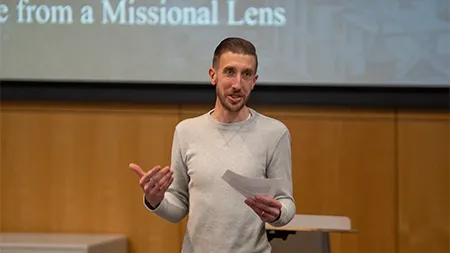
Theology is for everyone
Learn MoreLed by Dr. Jeremy Kimble, the “Theology Is for Everyone” series makes theology accessible and relevant, helping believers understand foundational biblical truths and apply them to everyday life for continued spiritual growth.