







If you’re considering a future in healthcare, you’re exploring a field centered on service, responsibility, and care for others. From direct patient care to leadership and community health, healthcare careers offer a wide range of paths shaped by both professional skill and personal values.
Use the buttons below to explore healthcare careers and degree pathways, understand the education and training required for each role, and learn how faith-integrated preparation at Cedarville University shapes professional practice, leadership, and patient care.
Explore Healthcare Careers
Healthcare careers span hospitals, clinics, laboratories, schools, nonprofit organizations, and community settings. Whether you’re drawn to hands-on patient care, scientific research, leadership, or community service, healthcare offers a wide range of roles that align with different strengths, interests, and callings.
Consider the various healthcare careers below and discover the degree pathways to get there.
Patient Care and Clinical Practice
direct patient care, nursing, physician assistant, clinical health roles
ExploreRehabilitation and Performance Care
physical therapy, athletic training, rehabilitation sciences, sports medicine
ExploreMental and Behavioral Health
mental health counseling, psychology, behavioral health, therapy pathways
ExplorePharmaceutical and Medication Sciences
pharmacy, pharmaceutical sciences, medication management, patient safety
ExploreHealthcare Leadership and Administration
healthcare administration, leadership, management, health systems
ExploreResearch and Health Innovation
clinical research, health sciences research, medical innovation, data analysis
ExplorePre-Professional Health Pathways
medical school preparation, dental, PA, optometry, professional health programs
ExploreIs a Healthcare Career the Right Fit for You?
If you’re thinking about healthcare, you probably want a career that feels meaningful. You may enjoy science, problem-solving, or working with people — or you may simply know you want to help others in practical, real-world ways.
Healthcare offers a wide range of paths, and healthcare careers are in demand. Some students are drawn to hands-on patient care, while others are interested in leadership, research, education, or improving community health.
Whether you picture yourself working in a clinic, hospital, school, lab, or community setting, healthcare careers allow you to combine skill, responsibility, and service in meaningful ways.
What Does It Take to Become a Healthcare Professional?
Healthcare careers don’t all follow the same path — and you don’t have to have everything figured out right now.
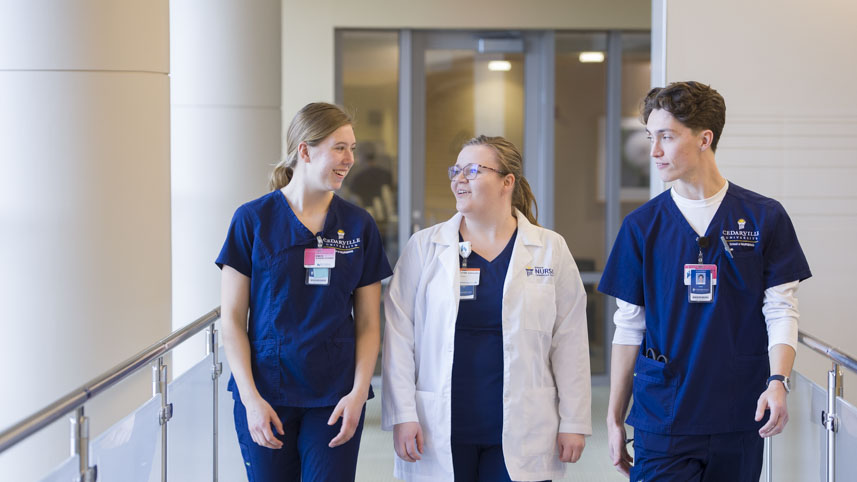
Some healthcare roles begin with undergraduate degrees, while others require graduate or professional education, clinical training, or licensure. Careers that involve direct patient care — such as pharmacy, athletic training, nursing, or physician assistant roles — often include hands-on clinical experiences as part of the educational process.
Many students start college by building a strong foundation in science and general education courses, then narrow their focus as they gain experience, confidence, and guidance.
How Does Faith Fit Into Healthcare Education at Cedarville?
At Cedarville University, students prepare for healthcare careers within an evangelical Christian learning community that connects faith with real-world practice. Rather than separating belief from profession, a biblical worldview shapes how students think through ethical decisions, interact with patients and colleagues, and respond to the responsibilities that come with caring for others.
Students are challenged to see healthcare not just as a career but as a way to serve. Alongside developing strong clinical skills, they grow in character, integrity, and leadership — qualities that prepare them to serve well in a wide range of healthcare settings.
Compare Healthcare Pathways and Programs
These expert-written articles take a closer look at specific healthcare programs, helping students understand curriculum, clinical experiences, and career outcomes.
Your Pharmacy School Questions Answered: What Every Future Pharmacist Needs To Know
Thinking about a career in pharmacy? Explore what pharmacists do, how to get into pharmacy school, and what to expect in your PharmD journey from start to finish.
Continue reading »
How to Pay for Grad School: Healthcare Degrees in Athletic Training, Nursing, Pharmacy, and PA Studies
Learn how Cedarville helps graduate healthcare students plan for affordability through financial aid, scholarships, loans, employer support, and wise cost planning.
Continue reading »
From BS to PharmD: What You Need To Know
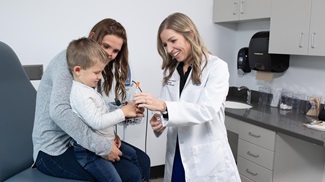
If you enjoy science and love helping people, pharmacy could be the perfect path for you. Pharmacists are trusted healthcare professionals who combine medical knowledge with personal care — ensuring medications are safe, effective, and used correctly.
Whether you’re a high school student just starting to explore healthcare or a college junior considering graduate school, understanding the path from a bachelor’s degree to a PharmD will help you see how this career could fit your strengths and calling.Continue reading »
Healthcare Blog Contributors
Cedarville University's healthcare blog articles are written by faculty and professionals with real-world and academic expertise.
Melissa Burns, MD
Associate Professor of Biology
Ken Blood, EdD, ATC
Master of Athletic Training Program Director, Professor of Athletic Training
Thad Franz, PharmD
Associate Dean for Student Affairs, PharmD Program Director, Professor of Pharmacy Practice
Jason Grahame, MPA, PA-C, DFAAPA
PA Program Director, Associate Professor of PA Studies
Mary Smith, PhD, DNP, FNP-BC, FAANP
Adjunct Instructor of Graduate Nursing Programs