








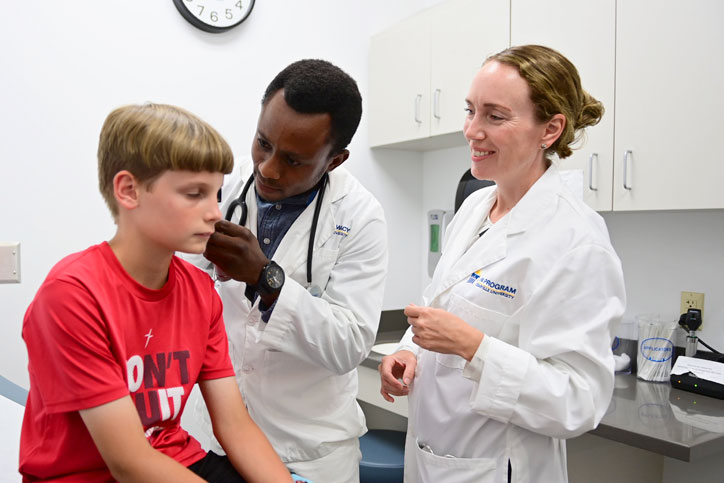
If you’re considering a future in healthcare, you’re exploring a field centered on service, responsibility, and care for others. From direct patient care to leadership and community health, healthcare careers offer a wide range of paths shaped by both professional skill and personal values.
Use the buttons below to explore healthcare careers and degree pathways, understand the education and training required for each role, and learn how faith-integrated preparation at Cedarville University shapes professional practice, leadership, and patient care.
Explore Healthcare Careers
Healthcare careers span hospitals, clinics, laboratories, schools, nonprofit organizations, and community settings. Whether you’re drawn to hands-on patient care, scientific research, leadership, or community service, healthcare offers a wide range of roles that align with different strengths, interests, and callings.
Consider the various healthcare careers below and discover the degree pathways to get there.
Patient Care and Clinical Practice
direct patient care, nursing, physician assistant, clinical health roles
ExploreRehabilitation and Performance Care
physical therapy, athletic training, rehabilitation sciences, sports medicine
ExploreMental and Behavioral Health
mental health counseling, psychology, behavioral health, therapy pathways
ExplorePharmaceutical and Medication Sciences
pharmacy, pharmaceutical sciences, medication management, patient safety
ExploreHealthcare Leadership and Administration
healthcare administration, leadership, management, health systems
ExploreResearch and Health Innovation
clinical research, health sciences research, medical innovation, data analysis
ExplorePre-Professional Health Pathways
medical school preparation, dental, PA, optometry, professional health programs
ExploreIs a Healthcare Career the Right Fit for You?
If you’re thinking about healthcare, you probably want a career that feels meaningful. You may enjoy science, problem-solving, or working with people — or you may simply know you want to help others in practical, real-world ways.
Healthcare offers a wide range of paths, and healthcare careers are in demand. Some students are drawn to hands-on patient care, while others are interested in leadership, research, education, or improving community health.
Whether you picture yourself working in a clinic, hospital, school, lab, or community setting, healthcare careers allow you to combine skill, responsibility, and service in meaningful ways.
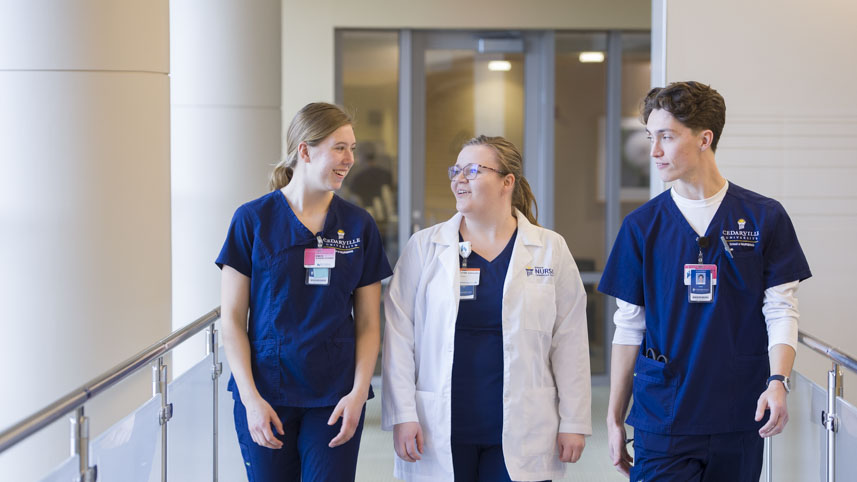
What Does It Take to Become a Healthcare Professional?
Healthcare careers don’t all follow the same path — and you don’t have to have everything figured out right now.
Some healthcare roles begin with undergraduate degrees, while others require graduate or professional education, clinical training, or licensure. Careers that involve direct patient care — such as pharmacy, athletic training, nursing, or physician assistant roles — often include hands-on clinical experiences as part of the educational process.
Many students start college by building a strong foundation in science and general education courses, then narrow their focus as they gain experience, confidence, and guidance.
How Does Faith Fit Into Healthcare Education at Cedarville?
At Cedarville University, students prepare for healthcare careers within an evangelical Christian learning community that connects faith with real-world practice. Rather than separating belief from profession, a biblical worldview shapes how students think through ethical decisions, interact with patients and colleagues, and respond to the responsibilities that come with caring for others.
Students are challenged to see healthcare not just as a career but as a way to serve. Alongside developing strong clinical skills, they grow in character, integrity, and leadership — qualities that prepare them to serve well in a wide range of healthcare settings.
Compare Healthcare Pathways and Programs
These expert-written articles take a closer look at specific healthcare programs, helping students understand curriculum, clinical experiences, and career outcomes.
Nursing vs Physician Assistant: Which Patient Care Path Fits You Best?
If you’re drawn to helping people heal, offering comfort in difficult moments, and building a career that truly matters, you’re already thinking like a healthcare professional. The next question is simple — what’s the best path to get there?
Healthcare careers consistently rank among the best in the nation for job satisfaction, growth, and impact. For students who feel called to serve others with compassion and skill, few roles are as rewarding as caring directly for patients.
Two of the fastest growing and most respected roles are nurses and physician assistants (PAs). According to U.S. News & World Report and the Bureau of Labor Statistics, both professions are expected to grow much faster than average over the next decade — and both rank near the top for salary and job security.
While nurses and PAs share the same mission of providing excellent patient care, the way they train, practice, and interact with patients can look very different. Understanding those differences is the first step in finding a healthcare career that fits you best.
Similar Callings, Different Paths: How Nurses and PAs Serve Patients
Nurses and PAs share a common goal: improving patients’ lives through skilled, compassionate care. They work side by side in hospitals, clinics, and community settings. But they get there through different educational paths and professional models.
Here is the big picture:
| Path | Primary Focus | Education Level | Work Model |
|---|---|---|---|
| Nursing | Patient-centered care, advocacy, long-term relationships | BS in Nursing → RN license Master’s or Doctorate in Nursing (optional) | RN: collaborative with providers DNP: independent within nursing scope (per state regulations) |
| Physician Assistant (PA) | Medical diagnosis, treatment, and procedures | Bachelor’s → Master’s in PA Studies (MMScPA) → PA licensure | Collaborative practitioner within the medical scope of practice |
Both are integral to patient care and outcomes — but the way they practice and the education required differ in important ways.
The Nursing Path: Education, Licensure, and Career Growth
Nursing is one of the most versatile and personally fulfilling careers in healthcare. It attracts students who want to build relationships, provide hands-on care, and serve in roles ranging from bedside to administration.
Steps To Become a Nurse: Education and Licensure
Most nurses begin with a Bachelor of Science in Nursing (BSN), which combines science courses, clinical experience, and professional preparation. At Cedarville University, the BSN program integrates excellent academics with a biblical worldview, preparing students not only to pass the NCLEX-RN licensure exam but to care for patients with both competence and compassion.
After earning a BSN and becoming a Registered Nurse (RN), you can continue to advance:
- Master of Science in Nursing (MSN): Specialize in leadership, education, or additional clinical practice.
- Doctor of Nursing Practice (DNP): Prepare for advanced clinical practice, typically in a specialized population or level of care.
What Nurses Do: Scope of Practice Explained
Registered nurses assess patients, coordinate care, administer treatments, educate families, and advocate for health promotion. As nurses pursue higher degrees, their scope broadens:
- Nurse Practitioners (NPs) diagnose, prescribe, and manage chronic conditions, often independently depending on state laws.
- Nurse leaders oversee units and quality initiatives.
- Nurse educators train the next generation of caregivers.
Nursing is a career you can grow with.
You can move into new roles, keep a healthy balance between work and family, and step into leadership — all without leaving the profession you love.
Why Nursing Appeals to So Many Students
- Relational focus: Nurses often spend more time with patients than any other provider.
- Career stability: Nursing is consistently ranked among the most trusted and in-demand careers in the U.S.
- Multiple entry points: From hospitals to missions, schools, and research, nurses fit almost anywhere healthcare happens.
- Faith integration: Nursing offers daily opportunities to live out Christ’s compassion and grace at the bedside.
At Cedarville, that faith-driven approach is central. Students are trained to see nursing as a ministry of healing, combining clinical skills with spiritual care.
The Physician Assistant (PA) Path: Education, Practice, and Opportunities
If you’re fascinated by diagnosing illness, developing treatment plans, and working closely with physicians and patients, then the PA route might fit you perfectly.
PAs (physician associates/physician assistants) are licensed healthcare professionals who are nationally certified, state licensed, and practice medicine in every specialty and setting.
As trusted, rigorously educated and trained healthcare professionals, PAs are dedicated to expanding access to care and transforming health and wellness through patient-centered, team-based medical practice. They perform exams, order and interpret tests, prescribe medications, assist in surgery, and manage patient care across specialties.
Steps To Become a Physician Assistant (PA)
To become a PA, you’ll need to complete:
- A bachelor’s degree (often in biology or a pre-PA major).
- A master’s-level PA program — such as the Master of Medical Science in Physician Assistant Studies (MMScPA).
- The Physician Assistant National Certifying Exam (PANCE).
Cedarville University offers a pre-PA track in several majors. Students may major in allied health, biology, or exercise science while completing all required PA prerequisites and clinical experience.
What PAs Do: Scope of Practice Explained
PAs are trained under the medical model, which emphasizes diagnosing, treating, and preventing disease. They work in collaboration with the physician, but their role is highly autonomous in most settings.
Typical PA responsibilities include:
- Conducting physical exams
- Diagnosing illnesses and injuries
- Ordering and interpreting lab results and imaging
- Prescribing medications
- Assisting in surgeries or emergency procedures
- Counseling patients on prevention and wellness
- Diagnosing illnesses and injuries
- Ordering and interpreting lab results and imaging
- Prescribing medications
- Assisting in surgeries or emergency procedures
- Counseling patients on prevention and wellness
Because of this medical focus, many students drawn to the PA path enjoy critical thinking, problem-solving, and fast-paced clinical environments.
Why Many Students Choose the PA Route
- Shorter path to practice than becoming a physician (usually six to seven total years of education after high school).
- Wide variety of specialties — PAs can work in family medicine, surgery, cardiology, emergency care, and more.
- High demand and excellent salaries, with median pay above $130,000 nationally.
- Strong collaboration with physicians and healthcare teams.
Like nursing, the PA profession values empathy, communication, and service — qualities that thrive in a faith-based learning community like Cedarville’s.
Comparing Education Pathways: Nursing vs. Physician Assistant (PA)
Whether you're pursuing nursing or physician assistant studies, your educational journey begins with a bachelor's degree. From there, each path offers unique opportunities to advance your training and expand your scope of practice.
For nursing students, a Bachelor of Science in Nursing (BSN) leads to RN licensure and the opportunity to begin practicing after graduation. Many nurses choose to continue their education through a Master of Science in Nursing (MSN) or Doctor of Nursing Practice (DNP) to become nurse practitioners (NPs), educators, or healthcare leaders.
Students pursuing the physician assistant path complete a bachelor's degree — often in allied health, biology, or exercise science — before enrolling in a master's-level physician assistant program, such as Cedarville's Master of Medical Science in Physician Assistant Studies (MMSc-PA). Graduates then earn national certification and state licensure to begin practicing as physician assistants.
Education Pathways at a Glance
| Stage | Nursing Path | Physician Assistant Path |
|---|---|---|
| Undergraduate Degree | Bachelor of Science in Nursing (BSN) | Bachelor's degree with pre-PA prerequisites |
| Clinical Preparation | Clinical rotations integrated throughout the BSN program | Patient care experience and prerequisite coursework completed before PA school (requirements vary by program) |
| Graduate Education | Optional: MSN or DNP for advanced practice or leadership | Required: master's degree n physician assistant studies (typically two to three years) |
| Licensure / Certification | NCLEX-RN after the BSN; additional certification for advanced practice | PANCE after completing a PA master's program |
| Time To Begin Practice | Approximately four years as an RN; six to eight years (total) as an NP | Approximately six to seven years total |
Graduate-Level Careers: NP vs. PA
Students often compare nurse practitioners (NPs) and physician assistants (PAs) because both diagnose illnesses, prescribe medications, and manage patient care. While their responsibilities frequently overlap, they prepare for those roles through different educational models.
| Nurse Practitioner (NP) | Physician Assistant (PA) |
|---|---|
| Builds on experience as a registered nurse | Begins practicing after completing a PA master's program |
| Educated using the nursing model, emphasizing holistic, patient-centered care | Educated using the medical model, emphasizing diagnosis and treatment of disease |
| Typically specializes in a patient population, such as family practice, pediatrics, or adult-gerontology | Trained as a medical generalist with the flexibility to work across many specialties |
| May practice independently in some states, depending on state regulations | Practices collaboratively with physicians as part of the medical team |
Both pathways prepare highly skilled healthcare providers who make a meaningful impact on patients' lives. The best choice depends less on the responsibilities you'll perform and more on the educational philosophy and career path that align with your interests.
Students who value the holistic, relationship-centered approach of nursing often find the NP pathway to be a natural progression. Those drawn to broad medical training, diagnostics, and the flexibility to move among specialties may find the PA profession a better fit.
How Nurses and Physician Assistants Work Together in Patient Care
In real-world practice, nurses and PAs often collaborate closely. For example, in a hospital:
- The RN monitors vital signs, provides bedside care, and updates the PA or physician about changes.
- The PA or NP assesses new symptoms, orders tests, and adjusts the treatment plan.
Each role complements the other. Nurses often form the backbone of continuous patient care, while advanced practice providers (PAs and NPs) serve as diagnostic and treatment partners within the medical team.
Both paths lead to impactful, respected, and mission-driven careers that are in strong demand and offer competitive salaries. They are careers of service and purpose that make a difference every single day.
Faith and Compassion in Healthcare: Learning To Serve Well
At Cedarville University, healthcare education is more than academics — it’s a calling.
Both the School of Nursing and the School of Allied Health and Psychology train students to care for patients with Christlike compassion and ethical integrity.
Distinctives of Cedarville’s Approach
- Christ-centered curriculum: Every course connects faith and learning, from anatomy to clinical ethics.
- Rigorous academics: Students are well-prepared for graduate programs, licensure exams, and clinical excellence.
- Hands-on experience: Labs, simulation centers, and clinical placements provide real-world training.
- Global mission focus: Opportunities for medical missions and cross-cultural service help students live out the Gospel through healthcare.
Whether you’re learning to start an IV or interpret an MRI, you’re also learning to serve with humility, integrity, and love.
Is Nursing or Physician Assistant the Right Fit for You?
Choosing between nursing and PA studies often comes down to your personality, interests, and long-term goals.
Here are a few questions to guide your decision:
If you answer “yes” to most of these, nursing may be your best fit:
- Do you value ongoing relationships with patients?
- Are you drawn to hands-on care and holistic health?
- Would you enjoy opportunities in education, management, or community health?
- Do you want flexibility to change specialties or balance family life over time?
If you answer “yes” to most of these, the PA path might be ideal:
- Are you fascinated by medicine, diagnostics, and treatment decisions?
- Do you like working closely with physicians in a fast-paced, team environment?
- Would you enjoy rotating through different specialties during your career?
- Are you prepared for an intensive graduate program focused on the medical model?
Neither path is “better” — they’re simply different ways to serve patients and God through healthcare.
Cedarville University: Preparing You for Either Path
Whether you feel called to nursing or to the PA profession, your foundation matters. Cedarville offers exceptional academic and spiritual preparation for both.
For Nursing Students
- Bachelor of Science in Nursing (BSN): A four-year program with small classes, personal faculty mentoring, and faith-based clinical training.
- High NCLEX pass rates and strong job placement within months of graduation.
- Opportunities for global missions, leadership development, and advanced study through Cedarville's online graduate nursing programs (MSN and DNP).
For Pre-PA Students
- Pre-PA track with majors like allied health, biology, or exercise science.
- Academic advising tailored to PA school prerequisites, including the PA program at Cedarville.
- Access to shadowing and clinical experience through local healthcare partners.
- Emphasis on Christ-centered ethics and compassionate patient interaction.
Cedarville’s community encourages every student to see healthcare as a ministry — to combine excellence with empathy, skill with service, and professionalism with purpose.
Two Paths, One Calling: Making an Impact Through Patient Care
Whether you become a nurse or a physician assistant, your work will change lives. You’ll comfort the sick, support families, and reflect God’s love through every patient encounter.
The choice isn’t about which career is more prestigious — it’s about where your strengths and passions align.
- Nursing offers deep relationships, flexibility, and leadership opportunities.
- The PA route offers medical depth, diagnostic challenges, and broad clinical versatility.
Both require intelligence, resilience, and a heart for service. And both can begin at a place like Cedarville University that prepares you academically and spiritually to make an eternal impact.
FAQs: Nursing vs Physician Assistant Career Questions
Can I apply to PA school with a nursing degree?
Yes, though most PA students pursue biology or allied health majors. Prerequisites vary by program.
How long does it take to become a nurse practitioner or PA?
It typically takes six to seven years total for either path (undergraduate plus graduate study).
Are both nursing and PA careers in high demand?
Yes — both rank among the top healthcare careers for growth and salary potential.
Does Cedarville offer both NP and PA pathways?
Yes — a BSN in nursing or pre-PA track (via allied health or biology) prepares students for either direction.
Ready to explore your next step?
Learn how Cedarville’s nursing and physician assistant programs can prepare you to serve Christ through healthcare and make a difference in the lives of others. Wherever He leads, Cedarville will help you find and follow your calling.
Posted in Healthcare



Healthcare Blog Contributors
Cedarville University's healthcare blog articles are written by faculty and professionals with real-world and academic expertise.

Melissa Burns, MD
Associate Professor of Biology
Ken Blood, EdD, ATC
Master of Athletic Training Program Director, Professor of Athletic Training
Thad Franz, PharmD
Associate Dean for Student Affairs, PharmD Program Director, Professor of Pharmacy Practice
Jason Grahame, MPA, PA-C, DFAAPA
PA Program Director, Associate Professor of PA Studies
Mary Smith, PhD, DNP, FNP-BC, FAANP
Adjunct Instructor of Graduate Nursing Programs