







If you’re considering a future in healthcare, you’re exploring a field centered on service, responsibility, and care for others. From direct patient care to leadership and community health, healthcare careers offer a wide range of paths shaped by both professional skill and personal values.
Use the buttons below to explore healthcare careers and degree pathways, understand the education and training required for each role, and learn how faith-integrated preparation at Cedarville University shapes professional practice, leadership, and patient care.
Explore Healthcare Careers
Healthcare careers span hospitals, clinics, laboratories, schools, nonprofit organizations, and community settings. Whether you’re drawn to hands-on patient care, scientific research, leadership, or community service, healthcare offers a wide range of roles that align with different strengths, interests, and callings.
Consider the various healthcare careers below and discover the degree pathways to get there.
Patient Care and Clinical Practice
direct patient care, nursing, physician assistant, clinical health roles
ExploreRehabilitation and Performance Care
physical therapy, athletic training, rehabilitation sciences, sports medicine
ExploreMental and Behavioral Health
mental health counseling, psychology, behavioral health, therapy pathways
ExplorePharmaceutical and Medication Sciences
pharmacy, pharmaceutical sciences, medication management, patient safety
ExploreHealthcare Leadership and Administration
healthcare administration, leadership, management, health systems
ExploreResearch and Health Innovation
clinical research, health sciences research, medical innovation, data analysis
ExplorePre-Professional Health Pathways
medical school preparation, dental, PA, optometry, professional health programs
ExploreIs a Healthcare Career the Right Fit for You?
If you’re thinking about healthcare, you probably want a career that feels meaningful. You may enjoy science, problem-solving, or working with people — or you may simply know you want to help others in practical, real-world ways.
Healthcare offers a wide range of paths, and healthcare careers are in demand. Some students are drawn to hands-on patient care, while others are interested in leadership, research, education, or improving community health.
Whether you picture yourself working in a clinic, hospital, school, lab, or community setting, healthcare careers allow you to combine skill, responsibility, and service in meaningful ways.
What Does It Take to Become a Healthcare Professional?
Healthcare careers don’t all follow the same path — and you don’t have to have everything figured out right now.
Some healthcare roles begin with undergraduate degrees, while others require graduate or professional education, clinical training, or licensure. Careers that involve direct patient care — such as pharmacy, athletic training, nursing, or physician assistant roles — often include hands-on clinical experiences as part of the educational process.
Many students start college by building a strong foundation in science and general education courses, then narrow their focus as they gain experience, confidence, and guidance.
How Does Faith Fit Into Healthcare Education at Cedarville?
At Cedarville University, students prepare for healthcare careers within an evangelical Christian learning community that connects faith with real-world practice. Rather than separating belief from profession, a biblical worldview shapes how students think through ethical decisions, interact with patients and colleagues, and respond to the responsibilities that come with caring for others.
Students are challenged to see healthcare not just as a career but as a way to serve. Alongside developing strong clinical skills, they grow in character, integrity, and leadership — qualities that prepare them to serve well in a wide range of healthcare settings.
Compare Healthcare Pathways and Programs
These expert-written articles take a closer look at specific healthcare programs, helping students understand curriculum, clinical experiences, and career outcomes.
Thinking About a Career in Healthcare? Here’s How Pre-Health Pathways Work
If you’re dreaming about becoming a doctor, dentist, physician assistant, or physical therapist, one of your biggest questions is probably: “What should I major in?”
It’s easy to assume there’s one right answer — something like “major in pre-med or pre-health.” But for most colleges, these aren’t majors at all. Rather, students choose a major, and sometimes a specific track within that major, that aligns with the requirements for their future healthcare program
So, What Exactly Is “Pre-Health”?
The term pre-health is often used as a general term referring to programs that prepare students for medical, dental, or PA school, such as pre-health professional development courses or pre-health student organizations.
Choosing the Right Major for You
You can pursue healthcare with a variety of majors as long as you complete the necessary science prerequisites. For example, you could choose a major like biology, molecular biology, chemistry, or allied health — and in some of these, you’ll also select a track that aligns with your desired profession. Then, your academic advisor will help you make sure your classes, labs, and experiences fulfill the academic requirements for professional school admission.
At Cedarville, here’s how students typically line up their goals with a major:
- Premedical: biology or molecular biology (sometimes chemistry)
- Pre-PA: allied health or biology (sometimes molecular biology)
- Pre-PT: allied health (sometimes biology)
Dr. Melissa Burns, Associate Professor of Biology at Cedarville, says the choice often depends on how certain you are about your next step.
“If your goal is toward physical therapy, occupational therapy, or speech therapy, we’ll usually direct you to allied health because their tracks more specifically align with those career options. [And] if you’re interested in PA school, either allied health or biology (or molecular biology) are good options. The biology curriculum incorporates more upper-level science courses, while allied health incorporates more psychology and health-related courses. Finally, for students interested in medical or dental school — or for those who may be considering between medical and PA school, we usually recommend a science major (biology, molecular biology, or chemistry). That way, you can meet all the medical or dental school prerequisites but still have flexibility to incorporate the PA school requirements as well.”
The key takeaway? Choose a major you’ll enjoy and excel in, not just one you think looks good on an application. Graduate schools care about your GPA, your experiences, and your passion — not just your transcript title.
How To Prepare for a Pre-Health Pathway
Thinking about pre-health before you ever step on campus? Smart move. The habits and experiences you start building now can make your first year of college a lot smoother — especially in a challenging field like healthcare.
Here are a few ways to get ready while you’re still in high school:
- Challenge yourself in math and science. Take the most rigorous classes your school offers — especially biology, chemistry, and math. If AP or dual enrollment options are available, go for them. They’ll help you build study skills and test endurance for the kinds of exams you’ll take later.
- Get exposure to healthcare. Job shadow, volunteer at a clinic or hospital, or even talk with healthcare professionals in your church or community. Dr. Burns encourages students to reach out early:
“Even if you can’t formally shadow, talk with physicians, dentists, PAs, or other healthcare professionals in your circle. Ask what they love about their work and what’s challenging.”
- Work on communication and leadership. Debate team, student council, coaching, or small group leadership — anything that helps you communicate clearly and manage responsibility will serve you well in healthcare.
- Start learning time management. College-level science courses require balance. Juggling classes, labs, and service now — with good organization — will make that transition easier later.
- Explore your calling. Spend time praying and thinking about why you’re drawn to healthcare. The earlier you start wrestling with the question, “Why do you want to be a doctor, a dentist, or a PA?”, the clearer your direction will be.
What You Can Expect as a Pre-Health Student
Challenging, Hands-On Classes
Pre-health courses are known for being rigorous — and that’s a good thing. You’ll take biology, anatomy and physiology, general chemistry, organic chemistry, physics, and biochemistry. These classes build your science foundation and prepare you for entrance exams like the MCAT, DAT, or GRE.
Pre-Health Advising and Professional Development Courses
Navigating prerequisites, entrance exams, and application deadlines can feel overwhelming — but you don’t have to figure it out alone.
Cedarville’s pre-health advising in both the School of Science and Mathematics and the School of Allied Health and Psychology includes pre-health professional development (PPD) courses and meetings with students for one-on-one planning and mentoring.
Your advisor helps you:
- Map out your four-year plan so you take the right courses in the right order.
- Track progress toward medical, PA, or dental school prerequisites.
Dr. Burns puts it simply:
“We’re trying to help students transition well — not just to college but to that first semester of medical or professional school.”
This hands-on, personal approach is one of the reasons Cedarville’s pre-health students feel confident and supported when it’s time to apply.
Your professional development courses make the pre-health journey clearer from start to finish:
- GBIO-1100 Pre-Health Professional Development I (for science majors) or ALHL-1000 Intro Allied Health Profession (for allied health majors) — usually taken your first year. You’ll explore healthcare careers, draft a personal statement about why you want to go into your desired healthcare profession, and hear from healthcare professionals working in various fields.
- GBIO-3100 Pre-Health Professional Development II (for premed and predental students) or ALHL-3940 Professional Development (for pre-PA and allied health majors) — typically taken your junior year. This course walks you through various aspects of the application process — from preparing for entrance exams to writing essays to mock interviews.
Dr. Burns says that early planning pays off:
“Our goal is for students to submit their medical school application within a week of the system opening. Because medical schools and PA schools have a rolling admission (where they’re extending offers for matriculation before the application cycle has closed), applying early significantly improves a student’s chances of getting interviews and ultimately being accepted.”
Real-World Experiences
Pre-health students at Cedarville are encouraged to get hands-on as soon as possible. You’ll find opportunities like:
- Becoming EMT certified and joining the student-run Cedarville University Emergency Medical Services (CU-EMS) program or the Cedarville Township Volunteer Fire Department
- Shadowing healthcare professionals in your hometown or nearby hospitals
- Volunteering through local ministries or medical missions
- Conducting research alongside faculty in biology or chemistry labs during the academic year or as a summer internship
While job shadowing or clinical placements will not be arranged for you, your professors and advisors may be able help you identify where and how to get those experiences.
Bonus Learning Opportunities
Some students take electives like Introduction to Human Gross Anatomy (a dissection lab), Intro to Ultrasound, or Basic EKG Analysis. These one- or two-credit courses give you hands-on exposure to the kind of work you’ll do in medical or professional school — and help ease that transition between college and graduate school.
Faith and Mentorship Make the Difference
Studying science at a Christian university adds another layer of purpose.
“Biology, molecular biology, and chemistry are all very science-heavy majors,” Dr. Burns explains. “That’s why it’s so valuable to study in a Christian environment — faith is woven into everything we do.”
Cedarville’s professors don’t just teach; they mentor. Faculty intentionally build relationships with students so they can guide them well — academically, spiritually, and professionally. Various science faculty also serve on the Pre-Med Committee, which writes letters of recommendation for students applying to medical or dental school — letters that reflect both academic strengths and personal character.
More Than Grades and Test Scores
Grades and exams matter, but Cedarville’s pre-health faculty also want you to think about your calling.
“Just because you can doesn’t mean you have to,” Dr. Burns says. “It’s important to think about how your career pursuits fit into your faith, family, and life goals.”
That kind of perspective helps students stay grounded — not just as they prepare for graduate school but as they step into demanding healthcare professions later on.
Quick Answers to Common Pre-Health Questions
Do I have to major in biology?
No. Most premedical students choose biology or molecular biology, but you can major in allied health, chemistry, or another science field. The key is completing all the required courses.
When should I start preparing?
As early as your first year. Cedarville’s professional development courses help freshmen explore healthcare careers and start building their plan early in their undergraduate journeys.
Do I need to know exactly what kind of healthcare I want to pursue?
No — not yet. Exploring options early (through shadowing and pre-health advising) helps you discover what fits best with your interests and strengths.
Can I change my mind after I start college?
Absolutely. With good advising, you can shift from premedical to pre-PA or another healthcare track early enough to stay on schedule for graduation. Or you can shift from science and healthcare to a completely different major. It’s important to keep your academic advisor informed about your thinking.
Are gap years okay?
Yes. Dr. Burns encourages students to view a gap year as growth years. For example, some students take a year between college and medical school to gain research experience, pursue clinical opportunities, or even complete a master’s program. In many cases, these students apply to medical school with more confidence and a stronger foundation.
Is PA school just a “backup plan” for medical school?
Not at all. These are different callings and lifestyles. Cedarville has students who could go to medical school but choose PA school instead because it fits their goals and family priorities better.
How competitive is getting into graduate healthcare programs?
Admission is challenging everywhere, but early preparation — like Cedarville’s advising, courses, and mentoring — helps students stay organized and confident when it’s time to apply.
Does Cedarville help with medical school applications?
Yes! The junior-year professional development course walks students through various steps — from timelines for applying to writing personal statements to mock interviews.
How does faith fit in?
At Cedarville, faith is the foundation for everything we do. It is the backdrop to every class and conversation. Not only will you complete a Bible minor, but your professors will approach each topic from a biblical worldview, helping you to engage the physical world through the lens of Scripture.
Why Pursue Pre-Health at Cedarville University?
Pre-health students at Cedarville benefit from:
- Personalized advising from faculty who know them well
- A clear, structured plan for premedical, pre-dental, pre-PA, and pre-PT students
- Hands-on opportunities like EMT experience, lab research, and specialized electives
- A Christ-centered foundation that prepares them to serve with both skill and compassion
If you’re serious about a career in healthcare — and you want an environment where faith and science work hand in hand — Cedarville can help you build the foundation you need.
Start Planning Your Future
It’s not just about checking boxes. It’s about discovering your calling and preparing to serve others well.
Whether you’re drawn to medicine, dentistry, physical therapy, or physician assistant studies, your journey starts now — with the right courses, mentors, and mindset.
Explore pre-health at Cedarville University and take your first step toward a future in healthcare.
Posted in Healthcare



Healthcare Blog Contributors
Cedarville University's healthcare blog articles are written by faculty and professionals with real-world and academic expertise.
Melissa Burns, MD
Associate Professor of Biology
Ken Blood, EdD, ATC
Master of Athletic Training Program Director, Professor of Athletic Training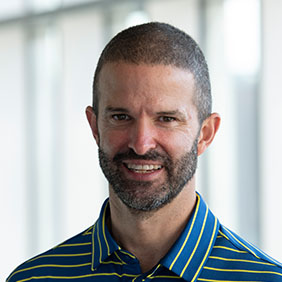
Thad Franz, PharmD
Associate Dean for Student Affairs, PharmD Program Director, Professor of Pharmacy Practice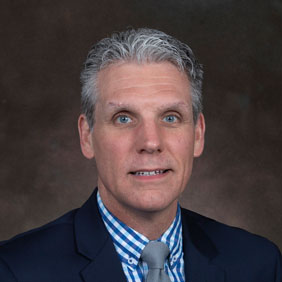
Jason Grahame, MPA, PA-C, DFAAPA
PA Program Director, Associate Professor of PA Studies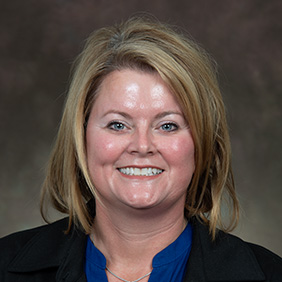
Mary Smith, PhD, DNP, FNP-BC, FAANP
Adjunct Instructor of Graduate Nursing Programs