








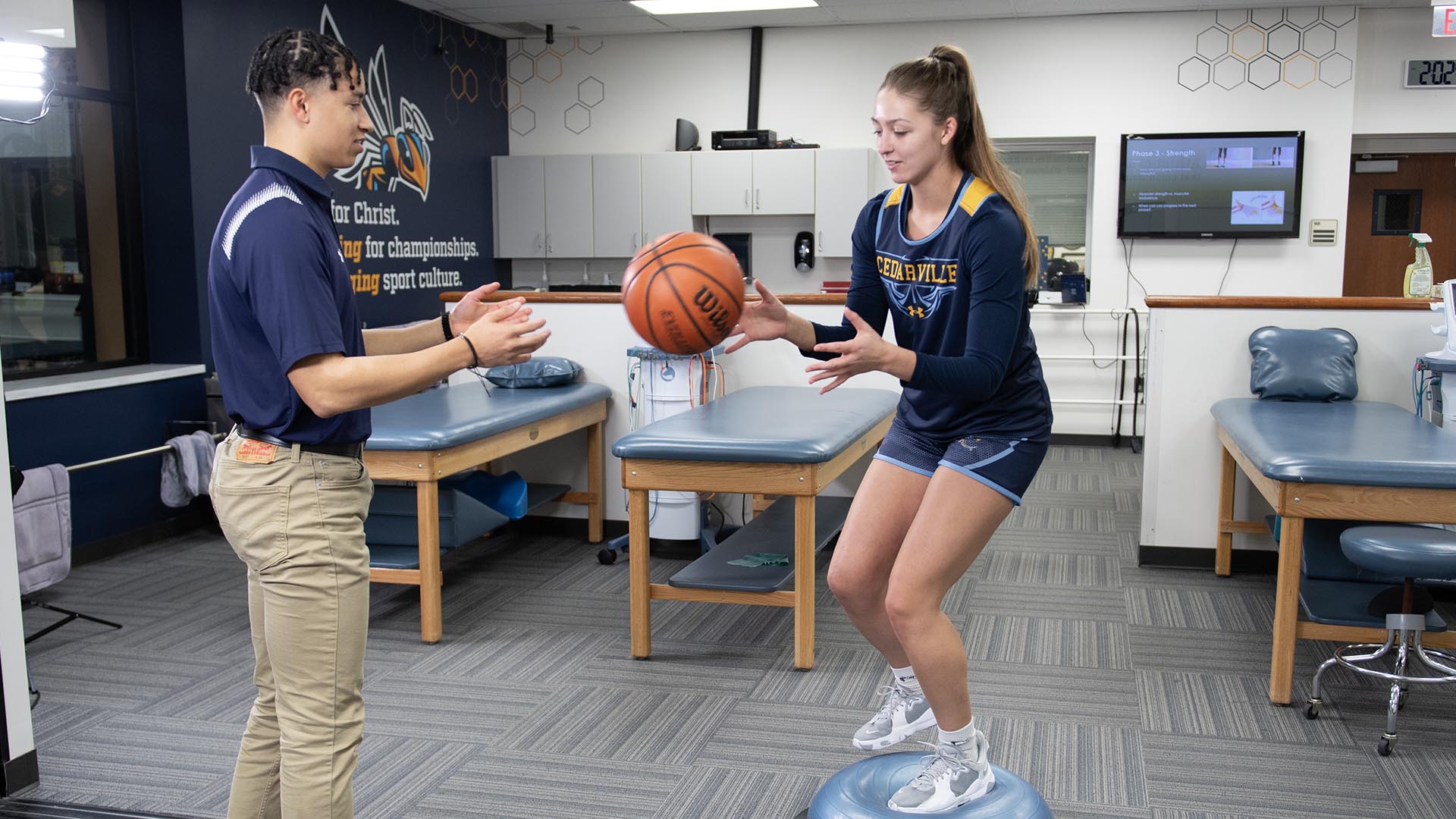
If you’re considering a future in healthcare, you’re exploring a field centered on service, responsibility, and care for others. From direct patient care to leadership and community health, healthcare careers offer a wide range of paths shaped by both professional skill and personal values.
Use the buttons below to explore healthcare careers and degree pathways, understand the education and training required for each role, and learn how faith-integrated preparation at Cedarville University shapes professional practice, leadership, and patient care.
Explore Healthcare Careers
Healthcare careers span hospitals, clinics, laboratories, schools, nonprofit organizations, and community settings. Whether you’re drawn to hands-on patient care, scientific research, leadership, or community service, healthcare offers a wide range of roles that align with different strengths, interests, and callings.
Consider the various healthcare careers below and discover the degree pathways to get there.
Patient Care and Clinical Practice
direct patient care, nursing, physician assistant, clinical health roles
ExploreRehabilitation and Performance Care
physical therapy, athletic training, rehabilitation sciences, sports medicine
ExploreMental and Behavioral Health
mental health counseling, psychology, behavioral health, therapy pathways
ExplorePharmaceutical and Medication Sciences
pharmacy, pharmaceutical sciences, medication management, patient safety
ExploreHealthcare Leadership and Administration
healthcare administration, leadership, management, health systems
ExploreResearch and Health Innovation
clinical research, health sciences research, medical innovation, data analysis
ExplorePre-Professional Health Pathways
medical school preparation, dental, PA, optometry, professional health programs
ExploreIs a Healthcare Career the Right Fit for You?
If you’re thinking about healthcare, you probably want a career that feels meaningful. You may enjoy science, problem-solving, or working with people — or you may simply know you want to help others in practical, real-world ways.
Healthcare offers a wide range of paths, and healthcare careers are in demand. Some students are drawn to hands-on patient care, while others are interested in leadership, research, education, or improving community health.
Whether you picture yourself working in a clinic, hospital, school, lab, or community setting, healthcare careers allow you to combine skill, responsibility, and service in meaningful ways.
What Does It Take to Become a Healthcare Professional?
Healthcare careers don’t all follow the same path — and you don’t have to have everything figured out right now.
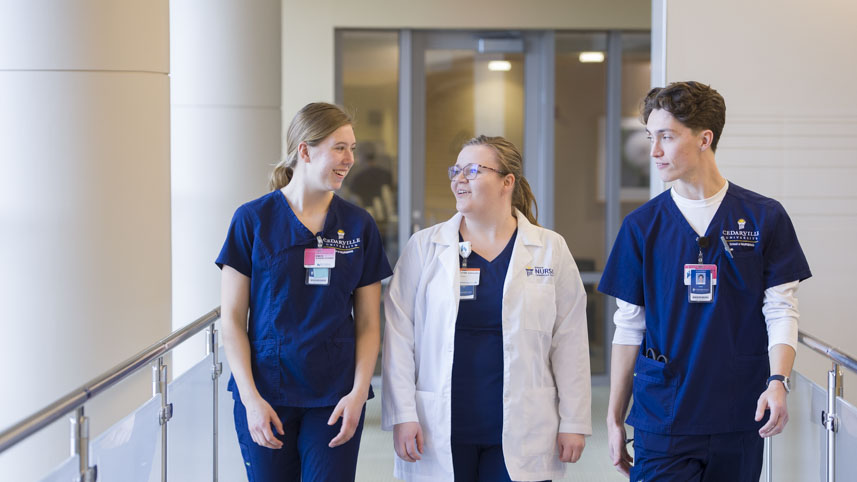
Some healthcare roles begin with undergraduate degrees, while others require graduate or professional education, clinical training, or licensure. Careers that involve direct patient care — such as pharmacy, athletic training, nursing, or physician assistant roles — often include hands-on clinical experiences as part of the educational process.
Many students start college by building a strong foundation in science and general education courses, then narrow their focus as they gain experience, confidence, and guidance.
How Does Faith Fit Into Healthcare Education at Cedarville?
At Cedarville University, students prepare for healthcare careers within an evangelical Christian learning community that connects faith with real-world practice. Rather than separating belief from profession, a biblical worldview shapes how students think through ethical decisions, interact with patients and colleagues, and respond to the responsibilities that come with caring for others.
Students are challenged to see healthcare not just as a career but as a way to serve. Alongside developing strong clinical skills, they grow in character, integrity, and leadership — qualities that prepare them to serve well in a wide range of healthcare settings.
Compare Healthcare Pathways and Programs
These expert-written articles take a closer look at specific healthcare programs, helping students understand curriculum, clinical experiences, and career outcomes.
Top 8 Reasons to Pursue an Athletic Training Career
The U.S. Bureau of Labor Statistics projects strong demand for athletic trainers, with employment expected to grow 17% through 2031 — much faster than the average for all occupations. So why should YOU pursue this field?
Why Become an Athletic Trainer? 8 Reasons Students Choose This Career
If you’re passionate about sports, helping others, and working in healthcare, a career in athletic training could be a great fit. Athletic trainers help prevent, diagnose, and treat injuries for athletes and active individuals in schools, clinics, and professional sports settings.
Here are the top 8 reasons you should consider an exciting athletic training career.
You Love Sports
Whether you were a serious competitor or a serious fan, if you love sports, why not pursue a field that revolves around your passion?
You Want to Make a Difference
Athletic trainers are like the guardian angels of the sports world. They're the ones who rush on the field when an athlete gets injured. They're also experts on injury prevention, assessment, and rehabilitation. And knowing that you're the one making a significant difference in an athlete's life – helping them recover faster and get back to doing what they love – is incredibly rewarding.
You Like Solving Problems
Being an athletic trainer is like solving a never-ending puzzle. Each athlete comes with a unique set of challenges, and it's your job to find the best way to address them. Whether it's coming up with a customized rehab plan or finding the right taping technique to provide support, you’ll get to be creative and innovative as you find solutions.
You Like Building Relationships
As an athletic trainer, you're not just treating injuries; you're building relationships. Athletes and their trainers often share a close bond. You'll provide physical and emotional support through the highs and lows of sports.
You Like Variety
Every day in the life of an athletic trainer is different. One day you might be working with an injured soccer player and the next, you're helping a swimmer train for a big meet. The variety of experiences keeps the job fresh and exciting, and you'll always be learning something new. If you're exploring careers in sports medicine, you might also find it helpful to compare athletic training vs. physical therapy to see which sports medicine degree path is right for you.
You Like to Learn
The field of sports medicine is constantly evolving. New research, techniques, and technologies are emerging all the time. As an athletic trainer, you'll have the chance to stay at the forefront of these developments, honing your skills and knowledge to continually learn and improve.
You Like to Work as a Team
Athletic trainers are part of a larger team. You won’t just work with athletes but also alongside coaches, doctors, and physical therapists. Together, you're all striving for the same goal: helping athletes perform at their best.
You Like That Winning Feeling
There's an immense sense of satisfaction that comes from knowing that you played a key role in getting an athlete back on the field or helping them reach their peak performance.
Athletic training is a career path that's challenging, fulfilling, and deeply rooted in the love for sports. If you share that passion and have a desire to make a positive impact on the lives of athletes, then this might just be the perfect role for you.
If you're wondering about the next steps, learn more about how to become an athletic trainer and the degree path from BS to MAT.
Did You Know?
Cedarville University offers a Master of Athletic Training degree (MAT) that prepares exceptional athletic trainers who serve with Christlike compassion. Cedarville also offers an accelerated BA in sport medicine + MAT 5-year option.
Posted in Athletic Training Healthcare Master of Athletic Training



Healthcare Blog Contributors
Cedarville University's healthcare blog articles are written by faculty and professionals with real-world and academic expertise.

Melissa Burns, MD
Associate Professor of Biology
Ken Blood, EdD, ATC
Master of Athletic Training Program Director, Professor of Athletic Training
Thad Franz, PharmD
Associate Dean for Student Affairs, PharmD Program Director, Professor of Pharmacy Practice
Jason Grahame, MPA, PA-C, DFAAPA
PA Program Director, Associate Professor of PA Studies
Mary Smith, PhD, DNP, FNP-BC, FAANP
Adjunct Instructor of Graduate Nursing Programs