








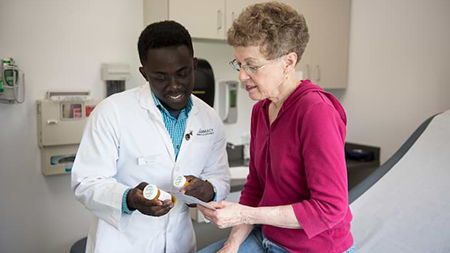
If you’re considering a future in healthcare, you’re exploring a field centered on service, responsibility, and care for others. From direct patient care to leadership and community health, healthcare careers offer a wide range of paths shaped by both professional skill and personal values.
Use the buttons below to explore healthcare careers and degree pathways, understand the education and training required for each role, and learn how faith-integrated preparation at Cedarville University shapes professional practice, leadership, and patient care.
Explore Healthcare Careers
Healthcare careers span hospitals, clinics, laboratories, schools, nonprofit organizations, and community settings. Whether you’re drawn to hands-on patient care, scientific research, leadership, or community service, healthcare offers a wide range of roles that align with different strengths, interests, and callings.
Consider the various healthcare careers below and discover the degree pathways to get there.
Patient Care and Clinical Practice
direct patient care, nursing, physician assistant, clinical health roles
ExploreRehabilitation and Performance Care
physical therapy, athletic training, rehabilitation sciences, sports medicine
ExploreMental and Behavioral Health
mental health counseling, psychology, behavioral health, therapy pathways
ExplorePharmaceutical and Medication Sciences
pharmacy, pharmaceutical sciences, medication management, patient safety
ExploreHealthcare Leadership and Administration
healthcare administration, leadership, management, health systems
ExploreResearch and Health Innovation
clinical research, health sciences research, medical innovation, data analysis
ExplorePre-Professional Health Pathways
medical school preparation, dental, PA, optometry, professional health programs
ExploreIs a Healthcare Career the Right Fit for You?
If you’re thinking about healthcare, you probably want a career that feels meaningful. You may enjoy science, problem-solving, or working with people — or you may simply know you want to help others in practical, real-world ways.
Healthcare offers a wide range of paths, and healthcare careers are in demand. Some students are drawn to hands-on patient care, while others are interested in leadership, research, education, or improving community health.
Whether you picture yourself working in a clinic, hospital, school, lab, or community setting, healthcare careers allow you to combine skill, responsibility, and service in meaningful ways.
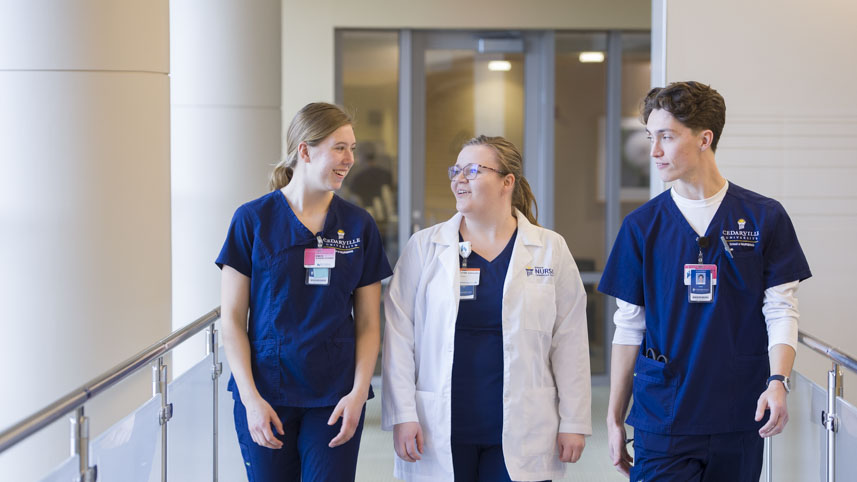
What Does It Take to Become a Healthcare Professional?
Healthcare careers don’t all follow the same path — and you don’t have to have everything figured out right now.
Some healthcare roles begin with undergraduate degrees, while others require graduate or professional education, clinical training, or licensure. Careers that involve direct patient care — such as pharmacy, athletic training, nursing, or physician assistant roles — often include hands-on clinical experiences as part of the educational process.
Many students start college by building a strong foundation in science and general education courses, then narrow their focus as they gain experience, confidence, and guidance.
How Does Faith Fit Into Healthcare Education at Cedarville?
At Cedarville University, students prepare for healthcare careers within an evangelical Christian learning community that connects faith with real-world practice. Rather than separating belief from profession, a biblical worldview shapes how students think through ethical decisions, interact with patients and colleagues, and respond to the responsibilities that come with caring for others.
Students are challenged to see healthcare not just as a career but as a way to serve. Alongside developing strong clinical skills, they grow in character, integrity, and leadership — qualities that prepare them to serve well in a wide range of healthcare settings.
Compare Healthcare Pathways and Programs
These expert-written articles take a closer look at specific healthcare programs, helping students understand curriculum, clinical experiences, and career outcomes.
Your Pharmacy School Questions Answered: What Every Future Pharmacist Needs To Know
Pharmacy is one of today’s most trusted and impactful healthcare professions — but if you’re just starting to explore it, you might have a lot of questions. How long does pharmacy school take? What do pharmacists actually do all day? And do you need a bachelor’s degree before starting a Doctor of Pharmacy (PharmD) program?
To answer these questions and more, we talked with Dr. Thad Franz, Associate Dean of Student Affairs and Professor of Pharmacy Practice at Cedarville University. Drawing from years of experience in pharmacy education and patient care, Dr. Franz breaks down what future pharmacists should know — from admission requirements to real-world career outcomes.
Why Pharmacy Matters in Today’s Healthcare World
Pharmacists are medication experts and play an important role in patient care by helping people use medications safely and effectively. They work with the healthcare team to prevent medication-related problems, answer questions, and support better health outcomes.
In many ways, pharmacists serve as the bridge between medical science and everyday care. They make healthcare more accessible — often available to answer questions or provide guidance without an appointment.
As Dr. Thad Franz explained, “When we teach our pharmacy students, they’re going to get more study, prep, and teaching on the study of drugs and how it applies to the body.” That depth of training gives pharmacists the expertise to help patients use medications safely and effectively.
As healthcare continues to evolve, pharmacists are stepping into expanded roles, providing direct patient care and working closely with doctors, nurses, and other professionals. They’re essential members of the healthcare team — combining science, communication, and compassion to make a lasting impact on patients’ lives.
“Healthcare is becoming more and more of a team effort,” Dr. Franz shared, “and pharmacists play a significant role in that team.”
What Pharmacists Actually Do
Pharmacists do much more than fill prescriptions. They are healthcare professionals who use their knowledge of drugs and the human body to promote health, prevent disease, and improve quality of life.
In community and hospital settings, pharmacists prepare medications, counsel patients, and collaborate with physicians to manage chronic conditions. “Pharmacists are equipped to educate and walk alongside patients through their journeys,” said Dr. Franz. In clinical and ambulatory care, they monitor how medications are working, adjust dosages, and support treatment for ongoing conditions like diabetes, heart disease, and asthma.
Beyond traditional roles, pharmacists also work in research and industry, helping to develop new drugs, improve manufacturing processes, and ensure medications meet safety standards. As Dr. Franz noted, “One misconception is that you either go community pharmacy or maybe somewhere in the hospital … there are over 100 different career options in pharmacy.” Other pharmacists find their place in public health, education, or government, contributing to policy, regulation, or teaching future healthcare professionals.
The field continues to expand into emerging areas such as pharmacogenomics — how genetics influence drug response — and sports pharmacy, where pharmacists guide athletes in using supplements safely and maintaining optimal hydration.
With over 100 career paths available, pharmacy offers a rare balance of science, service, and versatility — making it one of the most adaptable careers in healthcare.
How To Get Into Pharmacy School
Getting into pharmacy school starts with a solid academic foundation and a clear sense of purpose. Most programs require at least two years of college coursework — including biology, chemistry, anatomy, and math — before you can apply to a professional Doctor of Pharmacy (PharmD) program.
Strong math and science skills are key, and while many pharmacy students come from backgrounds in chemistry or molecular biology, others transfer in after completing required prerequisites. You don’t need a bachelor’s degree to apply — just 68 college credits and the right foundation courses.
Dr. Franz encourages premedical and pre-health students to consider pharmacy. The ideal candidates are drawn to both science and service: “They want to love people and serve people through medicine.”
Some students complete a bachelor’s degree first, while others take a direct-entry path that allows them to begin pharmacy training right after high school. “At Cedarville University, we have a six-year direct-entry program for any high school student considering pharmacy,” Dr. Franz explained. “Within six years, students earn a bachelor’s in pharmaceutical science, a Doctor of Pharmacy degree, and a Bible minor.”
A Glimpse Inside Pharmacy School at Cedarville University
Pharmacy students at Cedarville University spend their first two years completing the pre-pharmacy curriculum. Typically, students have 16–18 credit hours per semester with courses like chemistry, biology, and Bible as they prepare for the demands of the doctoral program.
Students who qualify through Cedarville’s Early Assurance program (3.25 GPA or higher) receive a $5,000 annual scholarship and guaranteed admission into the doctoral phase as long as they maintain a 3.0 GPA.
Once admitted to the professional phase, learning becomes more hands-on and applied. As they advance through the program, students take courses such as medicinal chemistry and immunology while building practical skills in labs that cover prescription compounding, patient counseling, and sterile technique.
“All of our students receive their intern licenses in their first professional year,” said Dr. Franz. “We want them to start practicing those responsibilities right away.” About one-third of the program is experiential learning as they complete clinical rotations in pharmacies and hospitals.
Cedarville’s faculty and students share a Christian commitment that shapes how they view ethics and patient care, and that worldview is woven throughout the program. “We talk about compassionate care, end-of-life treatment, and the sanctity of life,” Dr. Franz said. “Our students learn to approach those moments with both skill and biblical perspective.”
Even during clinical rotations, faith remains central. Students often find opportunities to pray with patients or discuss spiritual questions — always with humility and respect.
Pharmacy Career Paths and Success After Graduation
Cedarville pharmacy graduates are well prepared for success across the profession. About 30% go into community practice, while another 35–40% pursue postgraduate residencies or fellowships. Cedarville’s residency placement rate is 80%, impressive when compared to a national average of around 60%.
“Our students interview well,” Dr. Franz said. “They stand out because they’re hardworking people of integrity who are genuinely interested in others.”
Graduates also serve in pharmaceutical companies, research, and hospital settings. Many step into leadership quickly, and some are even advocating for their profession on Capitol Hill.
“One of our students is exploring sports pharmacy,” Dr. Franz noted, “helping athletes choose safe supplements and managing hydration treatments.”
What Makes Cedarville’s PharmD Program Distinctive
Cedarville University offers one of the few faith-based direct-entry PharmD programs in the U.S. “We’re preparing you to be a practitioner,” Dr. Franz said, “and, as our dean would say, a Christ ambassador in a white coat.”
All of Cedarville’s pharmacy students complete a cross-cultural immersion experience by serving in clinics and medical missions around the world. “We have teams that go to Northern India, Peru, and Guatemala,” he shared. “They use their pharmacy skills in real healthcare settings while learning to serve others with compassion.”
Class sizes remain small, typically 35–45 students, which ensures every student receives personal mentorship. “We want to know their names and their stories,” Dr. Franz said. “We call it pharmily — a family environment where students feel supported.”
Students also have the chance to add a dual degree, such as a PharmD + MBA or PharmD + MA in Strategic Innovation. These programs help prepare graduates for leadership roles and careers in healthcare management, administration, and entrepreneurship.
Your Top Pharmacy School FAQs, Answered by an Expert
What advice would you give someone considering pharmacy school?
“Shadow a pharmacist,” Dr. Franz advised. “Don’t just look at community practice — explore other healthcare roles to see how they work together.”
Is pharmacy school hard?
“It’s rigorous,” he admitted, “but don’t give up. Persevere, learn to be a good student, and take advantage of the resources around you.”
How should I prepare mentally and spiritually?
“Continue to pray about it. As the Lord leads you, He’s not going to steer you wrong.”
What do you wish every future pharmacist knew?
“The love of pharmacy for me is not necessarily about the science behind it or what I know,” Dr. Franz reflected. “It’s the people that you truly get to impact — improving their quality of life and developing trusting relationships that lead to opportunities to support and encourage them in their faith.”
Ready To Become a Pharmacist?
Pharmacy offers a way to combine an interest in science with helping others. Whether you're just starting to explore healthcare careers or already thinking about pharmacy school, learning more about the profession can help you decide if it's a good fit. Understanding what pharmacists do, the education required, and the career opportunities available can give you a clearer picture of what to expect and where this path could lead.
Posted in Healthcare



Healthcare Blog Contributors
Cedarville University's healthcare blog articles are written by faculty and professionals with real-world and academic expertise.
Melissa Burns, MD
Associate Professor of Biology
Ken Blood, EdD, ATC
Master of Athletic Training Program Director, Professor of Athletic Training
Thad Franz, PharmD
Associate Dean for Student Affairs, PharmD Program Director, Professor of Pharmacy Practice
Jason Grahame, MPA, PA-C, DFAAPA
PA Program Director, Associate Professor of PA Studies
Mary Smith, PhD, DNP, FNP-BC, FAANP
Adjunct Instructor of Graduate Nursing Programs